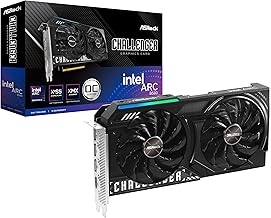
The graphics card market is more diverse than ever, and Intel's Arc series has firmly established itself as a compelling third option for gamers and creators. At the heart of this lineup sits the B580, a GPU designed to deliver excellent 1440p gaming and content creation performance without breaking the bank. But with multiple board partners offering their own takes, choosing the right model can be tricky. This guide dives deep into the top Intel Arc B580 variants, comparing their features, cooling solutions, and value propositions.
Understanding the Intel Arc B580 Platform
Before comparing specific cards, it's important to understand what the B580 brings to the table. This GPU is built on Intel's Xe-HPG architecture and typically features 12GB of GDDR6 memory on a 192-bit bus. This generous VRAM allocation is a standout feature, making it future-proof for games with high-resolution textures and ideal for creative workloads. Standard features across most models include support for the latest DisplayPort 2.1 and HDMI 2.1a outputs, enabling high refresh rate 4K gaming. For a comprehensive look at the architecture and its applications, check out our detailed B580 guide.
ASRock's B580 Contenders: Challenger vs. Steel Legend
ASRock offers two distinct flavors of the B580, catering to different user preferences. The ASRock Intel Arc B580 Challenger 12GB OC is the value-oriented option. It features a dual fan cooling system with a 0dB Silent mode, where the fans stop entirely under low loads for a completely silent experience. With a GPU clock of 2740 MHz, it provides solid out-of-the-box performance. You can read our in-depth ASRock B580 Challenger review for performance benchmarks.
For users seeking more cooling headroom and aesthetic flair, the ASRock Intel Arc B580 Steel Legend 12GB OC steps up with a triple fan design. This not only improves thermal performance but also allows for a slightly higher 2800 MHz GPU clock. The card also features Polychrome SYNC RGB lighting for system integration. Is it the ultimate 12GB GDDR6 gaming GPU? Our Steel Legend review has the answer.
Sparkle and WEELIAO: Alternative B580 Designs
Sparkle enters the ring with the aggressively cooled Sparkle Intel Arc B580 Titan OC. This card utilizes Sparkle's "Torn Cooling 2.0" technology with a large axial fan and a substantial heatsink, complemented by a metal backplate and subtle breathing light effects. It's designed for users who prioritize thermals and a unique aesthetic. We've covered this and other models in our ultimate B580 gaming guide.
Another interesting option is the WEELIAO GUNNIR Intel Arc B580 Index. This model offers a clean, dual-fan design and hits a 2670 MHz clock, positioning itself as another solid budget graphics card choice in the B580 family.
Considering B580 Alternatives and Complements
If your budget or needs are slightly different, the B580 ecosystem has siblings worth considering. The Sparkle Intel Arc B570 Guardian OC with 10GB GDDR6 is a close relative, often found at a lower price point. Is it a viable B580 alternative? Our B570 Guardian review explores this question. Similarly, the ASRock Intel Arc B570 Challenger 10GB offers a compelling package with 0dB cooling for efficient 1440p gaming.
For those building an entirely new system or upgrading cooling, pairing your new GPU with quality components is key. High-performance thermal paste like ARCTIC MX-4 can ensure optimal heat transfer from the GPU die. Furthermore, good case airflow is critical; a DARKROCK 3-pack of 120mm fans can significantly improve overall system thermals, allowing your B580 to sustain higher boost clocks. Learn more in our B580 cooling guide.
How Does the B580 Stack Up Against the Competition?
A natural competitor in this price segment is the ASUS Dual Radeon RX 7600 EVO OC. This card features 8GB GDDR6 and Axial-tech fans, but the B580's 12GB of VRAM gives it a clear advantage in memory-intensive scenarios. The choice often comes down to game optimization, driver maturity, and specific feature sets like Intel's XeSS upscaling versus AMD's FSR.
Ultimately, the Intel Arc B580 represents a fantastic value proposition in the mid-range GPU market. Whether you choose the silent operation of the ASRock Challenger, the robust cooling of the Steel Legend or Sparkle Titan, or the value of the WEELIAO Index, you're getting a 12GB VRAM graphics card capable of handling modern gaming and creative tasks with ease. For more component reviews and DIY PC building advice, explore our full range of GPU reviews and guides.